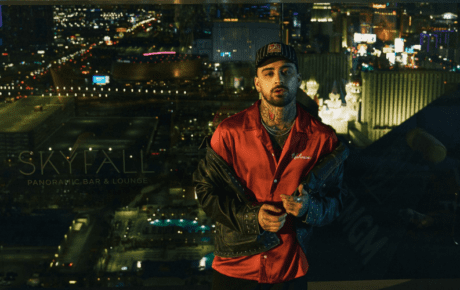
After more than seven years of waiting, The Fall-Off is finally here. J. Cole teased the project in 2018 with the track “1985” tacked onto the end of his conceptual KOD album. It shed the commentary on contemporary drug culture the rest of the album engaged in and was received as more of a piece of advice to rising Soundcloud rappers at the time. To tease his final album with such a track way back when sums up Jermaine Cole’s hip-hop philosophy: rather than tearing people down, he wants to see everyone succeed.
In between the release of that album, Cole took a detour and released two mixtapes while also fulfilling his dream of becoming a professional basketball player. Fast forward to 2026 and The Fall-Off is here in full, a double album that runs a feature-length 101 minutes long, complete with an explainer blog post giving listeners a nudge in the right direction when listening.
“Disc 29 tells a story of me returning to my hometown at age 29. A decade after moving to New York, accomplishing what would have seemed impossible to most, I was at a crossroads with the 3 loves of my life; my woman, my craft, and my city,” he explains.
The first disc, titled Disc 29, starts off with the aptly titled “29 intro” which features a sample and a skit. “Carolina in My Mind” by James Taylor plays while some young men are loitering by the side of the street. They are talking, having fun, and getting excited when all of a sudden three gunshots are let off and end the track. Cole immediately takes over with the highly energetic hook on “Two Six,” giving the repeating piece of context for the prior interruption saying “two six n****s wild b**ch.” The numbers are a reference to Cole’s hometown of Fayetteville in North Carolina, USA and its county code. As explained on his blog, the track sees Cole return to his hometown through the eyes of the young braggadocio we have come to expect in hip-hop. Talking his shit and saying how everything is achievable to him, whether its through “bags that don’t even fit in the back,” “cribs they never get sold to me, them b*****s get built for me,” or defying the odds as an outcast, we hear someone early on in the album’s reflective story.
The next track, “SAFETY”, is another early highlight. Immediately, we are met with an addicting drum loop that sounds equal parts Nas as it does Common but never does it sound dated. Another character piece, Cole takes on several different perspectives throughout the songs five minute runtime, leaving voicemails and voice notes reflecting on where the time has gone, who time has taken from him, and thinking about how he could have been better to those around him. Verse one is a friend reconnecting with Cole post-incarceration, telling Cole about how he is piecing his life back together and the old faces he is seeing now. Verse two is a friend reaching out and giving Cole the validation he needs on growing distant from his hometown friends, saying that he never expected Cole to keep such close contact with him because he knows how much effort Cole is putting into his career, before wishing him “safety” on his journey. Verse three is filled with regret as Cole tells the story of a late gay friend he once had and how his circle could have treated him better while he was alive, before moving onto another story about another friend who passed away too soon. The next song, “Run a Train” with ever-present trap icon Future, delivers more of the same message but this time with Cole’s explicit perspective. While less interesting in the theoretical sense than “SAFETY” and structurally simpler too, both songs could have fit easily on 4 Your Eyez Only, Cole’s most story-filled and outwardly reflective 2016 album.
The next three tracks are hit and miss. “Poor Thang” is a grower. Strong hi-hats and looping sampled vocals build and build while Cole raps the story of the young man has developed a tough facade to fit in with a group that doesn’t accurately reflect who he is. As he hammers the point home, Cole repeatedly insults the “punk b**ch” he/the person has become. “Legacy” is a bit of a nothing burger as it sees Cole falling back into his corny ways, only this time with guitars, and, while expected in the concept of this disc—the perspective of a 29 year old Jermaine—it isn’t exactly exhilarating to listen to. After that, “Bunce Road Blues” rolls along and becomes the emotional peak of the Disc 29. It sees Cole plotting the end of his career, cursing the state of the country and its gun violence, and growing disillusioned with the expectations surrounding him. Tems offers her vocals to the song and, much like how she was implemented on “WAIT FOR YOU” by Future, her refrain acts as the sample underneath Cole’s verses. Future comes in for a verse for the second time this album, before Tems delivers a verse in full. She acts as the other side of the story, answering Cole’s calls from his initial verse.
“WHO TF IZ U” is an obvious shift in tone. Cole brings out the energy he showed on “Two Six” and his delivery over the winding, dark piano sample is reminiscent of 2014’s “Fire Squad”. Perhaps aware of the length of the track, the second half of the song features a beat switch, something new for the album but easily a hallmark of 2020s rap, as the production trades pianos for synth hits and warbling tones. Cole continues his energy and it never feels stale. “Drum n Bass” continues with the disc’s messages so far but repackages it in a way that keeps it fresh. Yes, Cole is rapping again about becoming alienated from the everyman because of his success as an artist and how much of it is upheld through the tough act he puts on, but he is not using the same flows and verse structures from before. It is miles better than where he was ten years ago when walking the line between hard and soft exteriors, which really goes to show how much the time between KOD and The Off-Season really meant to him as it is rare for someone who has been in the rap game for so long to have such a late peak.
“The Let Out”, “Bombs in the Ville/Hit the Gas”, and a bonus track “Lonely at the Top” round out the end of the first half of the album, one that could serve as one of Cole’s best. Is it perfect? No, as “The Let Out” is not worth listening to more than twice, but, songs like “Poor Thang”, “SAFETY”, and “Bunce Road Blues” would easily put this in the upper echelon of Cole’s discography. Disc 39…
“Disc 39 gives insight into my mindset during a similar trip home, this time as a 39 year old man. Older and a little closer to peace.”
View this post on Instagram
Disc 39 continues the quality bar set by Disc 29. As stated in Cole’s blog post, the topics on this half of the album take on much more of a peaceful and life-affirming tone, but still he weaves in aggression when warranted. Immediately, we are graced with Cole singing over guitars on “39 intro”. I thought I pressed the wrong button and Jaden Smith appeared but two minutes and fifty seconds into the six minute long song, Jermaine Cole comes back repeating: “Imma go back in”. Track two, “The Fall-Off is Inevitable”, features no hook or bridge and only a verse and there’s no verse better than it so far. Cole illustrates his life in reverse, walking us through his most emotionally poignant moments: his death, the birth of his son, his marriage, and when he got signed to his label. As straightforward the chapters are, Cole flows between the topics with such finesse that he should be given his flowers.
The relaxed instrumental on “The Villest” allows Cole to continue delivering quality verse after verse. The life-affirming content I was referring to is here in full as Cole lectures about patience and self-fulfillment. “The Villest” also sees Cole bringing out the wonderful Erykah Badu and, while she’s not given a verse in full, the presence of her vocals on the hook only makes it probably the best on the album.
If you liked “Foldin’ Clothes” from 4 Your Eyez Only, you are going to love the next track: “Life Sentence”. The song most successful in painting life as a 39 year old, seemingly fighting off the temptation of infidelity, choosing to have kids, and tracing it back to their time together as children, Cole is telling the story of his love. The life sentence he refers to is the ring he puts on her finger while interpolating DMX’s flow from “How It’s Goin’ Down”. The earnest message is something Cole has been clowned for before, but here he writes in a way that infects you with his smitten sense, and I would not be surprised if it becomes a feature at weddings in the future.
Glossing over tracks 4, 6, and 7, the strongest three track run of the album starts with “I Love Her Again”. While it could be understood as a story about a woman Cole fell in love with, that would go against the prior “life sentence” he was so proud of. Instead, the song should be thought of as addressing hip-hop as a whole. He was seduced by the genre and saw it as a competitive sport and while some had their moment with her, eventually it was his turn. Instead of the genre growing with him, it grew regardless of him, leading to its hyper-commercialised current state. He details the distancing he has had to do because of that but is glad to still be friends with “her”.
With that, Cole ascends to a theoretical state on the next song, “What If”. This one sees him ponder how the rappers 2Pac and the Notorious B.I.G. could have reconciled should the two not have met their untimely deaths. Better experienced without spoilers, Cole really demonstrates his love for the culture on this track by perfectly blending each artist’s writing styles and deliveries with his own. The three track run ends with “Quik Stop”, a song where Cole details an interaction he has with a random person on the street and how his music affected them. Again, it is best to go in with no expectations, but the validation he receives from the person, for sticking to his guns by making his music the way he wants to, is so transparent in Cole’s teary delivery that it can leave you with goosebumps.
Another ending track “and the whole world is the Ville” comes and brings another bonus track with it, and then The Fall-Off ends. With what is seemingly his last album J. Cole has given us a look back on his career with several perspectives. He seems at peace with what he has been able to achieve in a monetary sense, but is most satisfied with how his music has been received by those in the real world: his hometown. He exhibits writing maturation characteristic of a four year break between albums but also still feels like the same old Cole we have grown to love. Hopefully, this is not the end but, if it is, he has given it his all.