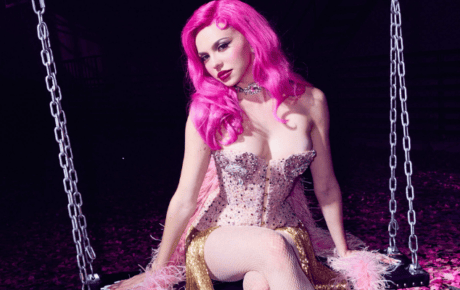
All the way back in September 2006, Fergie was on the cusp of pop domination. Her debut album The Dutchess set out to platform Fergie as a solo artist for the first time in her career, after rising to prominence with The Black Eyed Peas in 2002. With talent like hers, it was high time Fergie proved she could stand on her own two feet. Named in reference to The Duchess of York Sarah Ferguson, this album was about to blow California’s own Stacy Ferguson up, finding her own image and sound as Fergie across one of the most pivotal pop albums of the 2000s.
It proved easy for Fergie to find a unique lane. With a star-studded team of collaborators including names like will.i.am, Toby Gad and John Legend, she soon found a sound that was unapologetically weird, abrasive and over-the-top. Her debut album seamlessly weaves elements of R&B, soul and hip-hop in amongst elements of electropop, ska and bubblegum. In classic rap tradition, The Dutchess also frequently samples nostalgic older songs and twists them to suit Fergie’s own flow. The juxtaposition of classy 60s and 70s styles with 2000s shock value and sexuality created an exaggerated, purposefully unconventional brand of pop that would define the decade.
Much of The Dutchess focuses on recognising Fergie as the powerhouse of an artist she is, highlighting that this is only her debut, but she’s already made musical history across the globe. “The girls like their speakers pumping ‘cause I told ‘em to shake their humps”, she reminds us with a wink on ‘Here I Come’, a track which comes right after the braggadocious hit ‘Glamorous’. Whilst Fergie boasts about her wealth and luxurious lifestyle, she also reminisces on the days before she could afford the “champagne and limousines”, reminding her audience that underneath the “flossy, flossy” exterior, she’s a real person who once lived a life just like theirs.
That bravado takes centre stage on The Dutchess’ biggest singles, which still have immense staying power twenty years on. You’d be hard-pressed to find a nightclub that isn’t still playing ‘London Bridge’ on a Saturday night. Fergie asks her listeners to lean into her own caricature of celebrity, playing along with the idea she’s spraying the paparazzi with mace and skipping the line to the VIP section. With its explosive hook comedically using a British landmark as a sexual innuendo, shouting “Oh, sh*t!” over a funky horn section quickly made ‘London Bridge’ a dancefloor classic that sold the idea Fergie was an impossibly cool, unstoppable force.
Such confidence was well-earned, considering one of the album’s biggest hits took off by inventing an entirely new word. It’s impossible to talk about The Dutchess without talking about ‘Fergalicious’, an utterly eccentric dance track where Fergie once again collaborates with will.i.am to create an enduringly campy classic. Skittering rhythms, choppy vocals and a blatantly wrong hook misspelling “tasty” with an extra ‘e’ all come together on ‘Fergalicious’ to make a surprisingly satisfying pop-rap anthem. The oversaturated, colorful music video taking place in a candy factory also became one of Fergie’s most memorable visual moments, and helped convince the world “fergalicious” was an apt descriptor for anything truly awesome.
Across the record, Fergie also set out to prove her worth as a vocalist. ‘All That I Got’ (The Makeup Song)’ reveals Fergie’s vulnerability underneath the persona, as she asks her lover sweetly over soaring strings if he’d still love her “if I didn’t work out or I didn’t change my natural hair”. She shows off incredible range, control and emotion on songs like ‘Losing My Ground’ and the sexy bedtime number ‘Velvet’, but there’s a particular magic to the closer ‘Finally’, a timeless ballad about settling down with the right person. Underneath Fergie’s powerful voice, John Legend offers up delicate piano playing and sweet harmonies, co-writing and producing the track.
The most iconic of the ballads is of course ‘Big Girls Don’t Cry (Personal)’. An outlier on the record due to its more stripped-back acoustic production, this song explores the pain of moving on from a romance that once felt as innocent as a childhood crush. Its visceral lyrics are simple and honest, connecting with anyone who’s ever been in love, and they’re all the more powerful thanks to the mellow instrumentation allowing Fergie’s delivery to really shine.
And it’s always worth acknowledging ‘Clumsy’, a sticky-sweet number where a doe-eyed Fergie sings about a romance that makes her fall over herself. Little Richard’s tongue-in-cheek chant of “The girl can’t help it” backs Fergie’s silly, lighthearted lyricism, paired with bright digital melodies that make the song dangerously catchy. It’s the perfect example of how The Dutchess explores Fergie’s hyperfeminine side, so as to make the more conventionally masculine, cocky hip-hop moments hit harder, and present the woman behind the artist as a fully rounded character.
Some of the album’s more obscure entries and bonus tracks also showcase impressive experimentation from Fergie. ‘Mary Jane Shoes’ is a clever innuendo which begins as a reggae number featuring I-Three and Rita Marley. Its latter half suddenly pivots into a thrashing, punk-rock track, which eventually crumbles away to Fergie scatting a dreamy late-night high of a finale. She similarly toys with structure on ‘Wake Up’, arguably her rockiest song thanks to a shouted chorus and gritty electric guitars which boost the energy before they fade out into a sleek, sultry interlude.
Releasing countless unique editions in different territories, there are many underdiscussed B-sides and hidden tracks from The Dutchess era which reveal just how many new ideas Fergie pursued during recording. From bangers like ‘Get Your Hands Up’ to the fashion-themed bop ‘Labels or Love’, and even a cover of Heart’s ‘Barracuda’, there’s plenty more to explore outside of the standard thirteen-track album. Whilst the final product of The Dutchess proved sleek, polished and cohesive, those deep cuts showcase an artist who refused to let public expectation and genre restrictions box her in.
Two decades ago, Fergie took the crown of The Dutchess and transformed herself into pop royalty with an incredibly versatile debut album. Going down as one of the best-selling albums of the 2000s, The Dutchess’ commercial and sonic impact is undeniable, and still rings through some of the best new music today. This album is well worth a revisit to celebrate its twentieth anniversary, and remind yourself it’s always a good day to be “Fergalicious”.